
CASE FILE #026 — THE THING THAT SITS BY THE BED
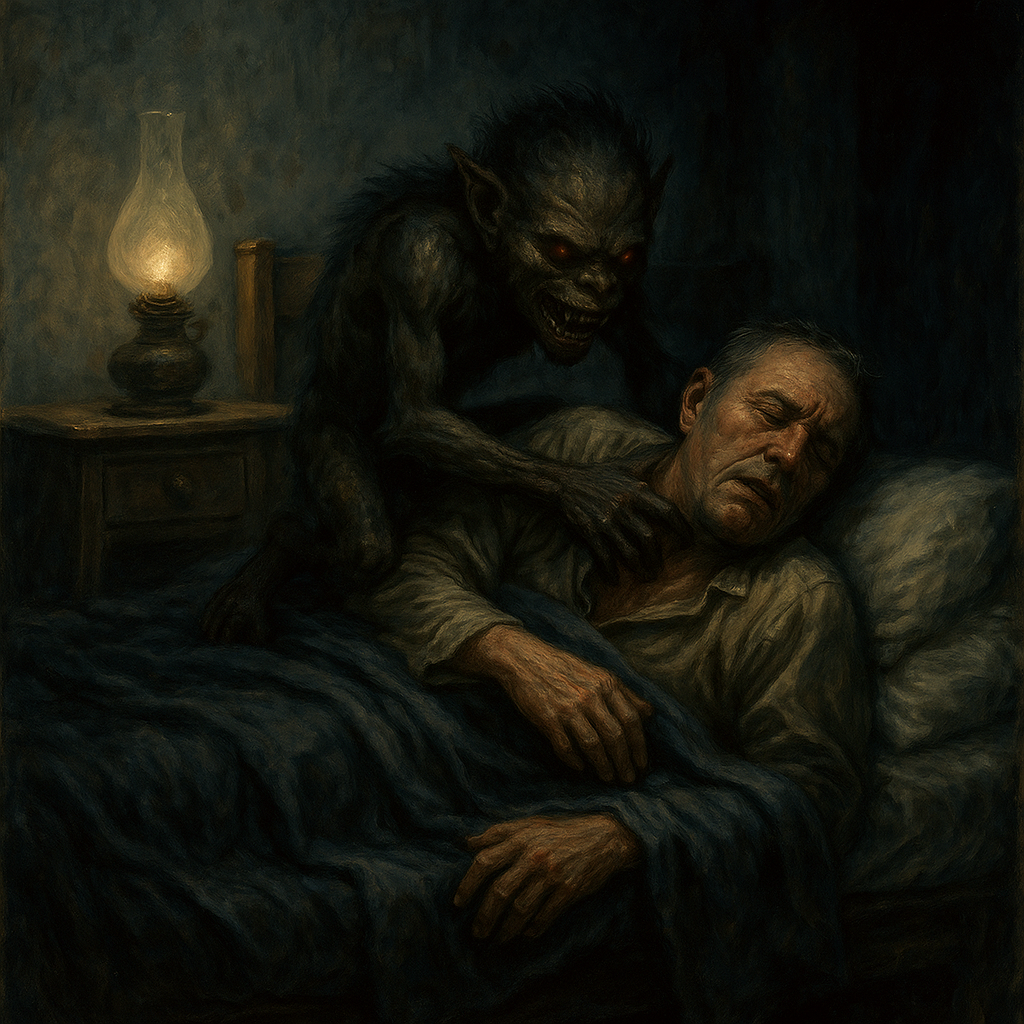
Quick Facts
Region: Southern Africa — South Africa, Lesotho, Zimbabwe, Eswatini
Also Known As: Tikoloshe, Tokolotshe, Hili
Classification: Familiar / Parasitic Spirit / Night Terror Entity
Primary Origin: Zulu & Xhosa ritual magic; summoned through dark rites
Typical Behavior: Nighttime harassment, paralysis, stalking, violent mischief
First Signs: Sleeplessness, unexplained scratches, icy pressure on chest, nightmares
Traditional Weakness: Raised beds, burning impepho, protective charms, holy water
Introduction
The first sign is never the creature —
but the silence.
Dogs stop barking.
Night insects fall quiet.
A breath of cold moves through the house,
though the windows are sealed.
Then comes the weight —
as if a small body climbs onto your chest,
pressing the air from your lungs.
You try to move,
but your arms feel bound.
Your mouth opens,
yet no sound escapes.
A shadow shifts in the corner.
Something watches.
Something waits.
This is the Tokoloshe,
a feared entity woven into the fabric of Southern African belief.
Not a fairy tale,
but a presence tied to jealousy, revenge,
and the dangerous edges of the unseen world.
Many claim it is created —
never born —
brought forth by those who seek to harm others.
Once summoned,
it may linger long after its purpose is fulfilled,
feeding on whoever sleeps closest to its path.
This file recounts
the legends,
the patterns,
the terror
— and the cases that remain unexplained.
Origins — Bound in Bone, Commanded in Shadow
The Tokoloshe, in its oldest telling,
began as a puppet of sorcerers —
a conjured being,
fashioned from a corpse or animal,
altered to serve a master.
A sangoma or witch-doctor
is said to remove the body’s tongue and eyes,
pierce a burning iron rod through the skull,
and whisper incantations
that wake the husk into unnatural life.
When it rises,
its maker cuts a hole into the creature’s head
— removing part of the brain —
to make it obedient.
From that moment on,
it serves.
Some legends say
a Tokoloshe is not flesh at all,
but a spirit that rides shadows,
wearing only a suggestion of a body —
stunted, hairy, hungry.
Others say it was once human,
changed by a curse,
its soul shattered and trapped.
All versions agree on one truth —
It is not an accident.
It is an instrument.
And the hand that summons it
is almost always human.
Appearance — Small in Stature, Enormous in Malice
Because the Tokoloshe is tied to magic and intent,
its form varies —
but recurring features include:
- Child-sized or smaller
- Grey, leathery skin
- Sparse fur along arms, spine, or jaw
- Long fingers, clawed and nimble
- Sunken or glowing eyes
- Wet, sour odor
- Mouth too wide for its face
Some accounts describe it with:
- A missing chunk of skull
- Genitals exaggerated grotesquely
- A limp or crooked stance
It walks, crawls, or clings to walls.
It may appear briefly in full form —
but often only in flashes:
a silhouette,
red eyes reflecting moonlight,
a squat figure slipping behind furniture.
Animals see it most clearly,
and react with panic.
Humans almost never see it head-on —
unless it wants them to.
Behavior — The Night Parasite
The Tokoloshe’s goal differs by the intent of its summoner,
but its habits are consistent:
- It enters at night
- It stalks silently
- It feeds on spiritual vitality
It is drawn to:
- Conflict within a household
- Jealousy between neighbors
- Envy of wealth or success
- Vulnerable sleepers
It causes:
- Sleep paralysis
- Nightmares
- Loss of strength
- Hallucinations
- Wasting illness
Its cruelty is intimate.
It prefers to get close —
lying beneath beds,
curling beside victims,
whispering in unfamiliar voices.
Some claim the Tokoloshe
can mimic the dead,
calling out to its target
in a voice they once loved.
It does not bargain.
It takes.
And sometimes,
it kills quietly —
leaving no wound
except fear
etched on the face.
Typical Pattern
- Conflict sparks — jealousy, betrayal, revenge
- A summoner calls it forth
- Strange events begin — animals panic, nightmares deepen
- Victim feels watched — especially at night
- It appears — briefly, in shadows
- Paralysis — inability to move at night
- Physical harm — scratches, suffocation, fever
- Decline — victim weakens, grows fearful
- Outcome —
- Death
- Fleeing the home
- Summoner retracts command
The Tokoloshe rarely leaves on its own.
It obeys only two things:
The one who sent it
— or ancient rites that force it back.
Abilities
Shadow Manipulation
Hides in darkness; moves unseen.
Paralysis
Pins victims to bed; prevents cries for help.
Vitality Drain
Slowly weakens victims; illness follows.
Invisibility in Full Light
Seen only in dimness or while eyes are half-open.
Voice Mimicry
Uses familiar voices to lure or confuse.
Object Disturbance
Moves bedding, opens doors, shakes beds.
Servant of Intent
Acts on the desires of its summoner.
Documented Encounters
Below are cases drawn from oral history, surviving records, and witness testimony.
1888 — KwaZulu-Natal Homestead Deaths
A respected cattle owner gained sudden wealth.
Close neighbors grew bitter.
Not long after,
his wife began waking at night
unable to breathe.
She whispered of a small creature
perched on her chest
with glowing eyes.
Within weeks,
two of her children died in their sleep.
No wounds.
No illness.
Elders confirmed Tokoloshe involvement.
The family bed was raised on bricks —
a tactic still used today —
and the attacks slowed.
But the husband eventually fled,
and the homestead fell to ruin.
It still stands.
No one sleeps there.
1912 — Mbabane, Eswatini
A young servant claimed
a Tokoloshe entered her quarters at night,
scratching her legs
and dragging her blankets away.
She reported
hearing chewing noises
beneath her bed.
When elders lifted the mattress,
they found nothing
but deep, fresh claw marks in the wood.
The girl was relocated.
The room stayed empty.
Her legs bore scars
until her death.
She always refused to speak of that year.
1956 — Lesotho Dormitory Panic
(One of the most famous Tokoloshe events)
At a girls’ boarding school,
students reported:
- Cold hands touching their faces
- Blankets torn away
- Breathing beside their beds
One girl described
a “half-child” with dark skin
crawling across the ceiling.
Panic spread.
Healers were summoned.
Beds were raised on bricks.
The affliction stopped.
The school never spoke of it publicly again.
1970 — Johannesburg Townhouse
A migrant worker living alone
claimed something small
climbed onto his chest nightly.
At first, he thought it was sleep paralysis —
until he saw claw marks
on his collarbone.
His dog refused to enter the house.
Neighbors reported noises —
like something running
on the roof at night.
The man moved.
Months later,
the next tenant experienced nothing.
1983 — Xhosa Village Incident
A respected elder
fell violently ill without cause.
At night,
villagers heard screams from his hut.
He raved about a creature
with “black fingers
and a broken head.”
He died suddenly, eyes open,
face twisted in terror.
The hut was purified
and then burned.
Witnesses insisted
they saw a small figure
flee into the hills.
—
2002 — KwaZulu-Natal Radio Broadcast
A man called in, frantic.
He claimed
his sister was being attacked nightly —
and that they had seen
a small, gray creature
hiding beneath her bed.
He described its breath —
“hot and wet like a dog,”
but the body was
“like a small dead man.”
The host tried to question him;
the man screamed mid-sentence,
and the line went silent.
The station could not trace the call.
2011 — Rural Zimbabwe
A widow heard footsteps
and whispering inside her house,
though she lived alone.
One night
she awoke unable to breathe.
She saw a small shadowy figure
sitting on her chest.
It whispered in her dead husband’s voice.
The next morning,
she fled to her sister’s home.
A traditional healer confirmed
a Tokoloshe had been sent
by a jealous relative.
A cleansing ritual was performed.
The attacks stopped.
The widow never returned home.
2020 — Mpumalanga Mining Quarters
Multiple workers reported
night disturbances:
- Scratching on walls
- Small footprints near beds
- Sudden breathlessness at night
One worker awoke
to see a creature
sitting at the foot of his bed,
its teeth bared.
It vanished when he screamed.
The next day,
the worker quit
and left camp.
Others followed.
No official report was made.
Regional Variants
Zulu — The Servant of Sorcery
Small, hungry; used to harm enemies.
Xhosa — The Invisible Terror
Barely visible; attacks silently.
Lesotho — The Night Mischief
Steals livestock, harasses sleepers.
Zimbabwe — The Soul-Eater
Linked to deaths without wounds.
Cultural Significance
The Tokoloshe represents:
- Unseen aggression
- The danger of envy
- Night vulnerability
- Spiritual sabotage
It is a living fear —
a reminder that conflicts have consequences
beyond the physical world.
It teaches:
Jealousy is never private.
It manifests.
It spreads.
And sometimes,
it breathes.
Protection & Weakness
Active Protections
- Raise bed on bricks
- Burn impepho
- Salt around sleeping space
- Protective talismans
- Holy water
True Counter
A powerful healer
or the original summoner
must dismiss it.
Without this,
it may linger for decades.
Symbolism & Interpretation
The Tokoloshe is:
- A weapon of the jealous
- A parasite of the weak
- A nightmare that crosses into daylight
It is the embodiment of harm with purpose —
a monster sent by someone you know.
It blurs the boundary between:
Victim & target
Nightmare & reality
Spirit & flesh
It is not random.
It is chosen.
Why Its Legend Lives
Because we still fear:
- Waking unable to move
- Eyes watching in the dark
- Footsteps no one made
- Sudden deaths with no explanation
And most of all—
We fear that someone we trust
could send harm
without ever lifting a hand.
Tokoloshe is not feared
because it kills.
It is feared
because it obeys.
Conclusion
The room is still.
The lamp burns low.
A scrape sounds beneath the bed —
too quiet to be a rat,
too slow to be a dream.
Your breath shortens.
You tell yourself it’s nothing.
Then the weight settles on your chest.
Small.
Cold.
Heavy.
You try to scream —
but the thing leans close,
and whispers a name.
Not its own.
Yours.
The Tokoloshe has come.
Not for flesh —
but for permission.
For fear.
And it has already found both.