
The Aswang — The Hunger That Wears a Face
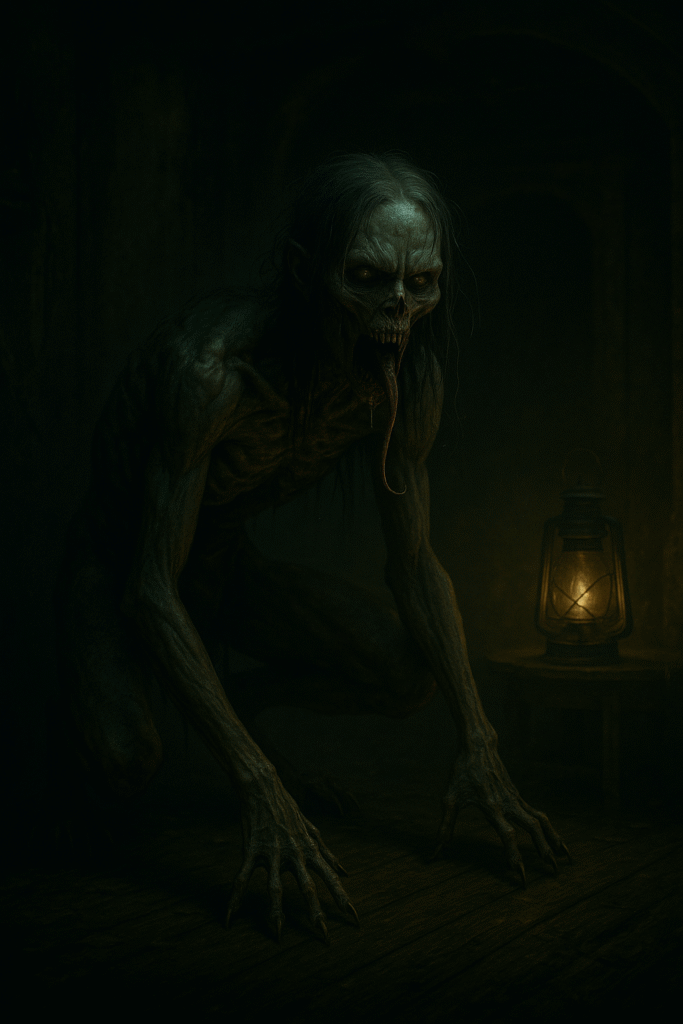
Quick Facts
Region: The Philippines (strongest in Western Visayas, Bicol, Southern Tagalog, Mindanao)
Also Known As: Manananggal, Tik-tik, Wakwak, Bal-Bal, Mandurugo, Sigbin (regional/variant names)
Classification: Shape-shifting predator / witch-ghoul hybrid
Primary Origin: Pre-colonial folklore amplified by colonial demonology
Typical Behavior: Hunts at night; preys on the vulnerable (pregnant women, infants, the sick, lone travelers); hides by day as an ordinary person
First Signs: Faint tik-tik call (near means far / far means near), scratching on roofs, strange shadows, unexplained wasting illness
Weakness (traditional): Garlic, salt, stingray tail (buntot pagi), blessed objects, loud noise, sunlight; for manananggal—salt/ash on the severed lower torso
Introduction
A warm night sits heavy over the barrio. Roosters sleep, dogs refuse to bark. On a nipa roof, something lands without a sound. A faint tik…tik… drifts on the wind—the quieter it seems, the nearer it is. Inside, a mother turns in her sleep, one hand over her belly. Between the bamboo slats above, a black, hair-thin tongue searches the dark.
This is no thief and no stray dog. This is the Aswang—the Philippines’ oldest shadow, wearing human skin by day and hunger by night. Neither pure monster nor mere witch, the aswang blurs the line between person and predator. This case file follows the trail: from origins and variants to hallmarks, behaviors, protections—and why the legend endures.
Origins — Before Cross and Candle
The word aswang moves like smoke between languages—echoes of aso (dog), whispers of the older asuwang/asuoang. Long before chronicles and catechisms, islanders traded stories of beings that drank blood, ate viscera, stole corpses, and walked as animals in the dark. When foreign priests arrived, they folded many spirits, ghouls, and witches into one name: Aswang—the most feared of nightthings.
Unlike imported vampires or werewolves, the aswang is native: shaped by rice fields and mangroves, wakes and windless nights, the throb of drums and the hush after. It is the Philippines’ answer to the question all villages must ask: Who’s out there, and what wants in?
What Creates an Aswang?
Folklore offers multiple paths. All end hungry.
- Inheritance of the Black Chick: A dying aswang transfers a tiny living “black chick” from mouth to mouth into a chosen heir. It nests in the stomach and births the craving.
- Covenant & Craft: A person seeks power—brews oil at the wrong hour, whispers the wrong words—and becomes more appetite than human.
- Contagion: Sharing food fouled by an aswang (or consuming its saliva) can “turn” the careless.
- Lineage & Secrecy: Some families are whispered to carry it—marrying, moving, hiding—passing the darkness like a surname.
Whatever the road, the destination is the same: the body obeys hunger; the heart learns to pretend.
Appearance — Two Faces of Night
The Mask (Day Form)
- Ordinary man or woman; quiet, watchful, often reclusive
- Eyes sometimes bloodshot; reflections said to appear upside down in their pupils
- Eats little in public; avoids direct gaze, priests, and wakes
The Reveal (Night Form)
- Shapeshifter: Becomes a black dog, cat, boar, or large bird; moves too fast, too silent, slightly wrong
- Viscera-sucker: A winged upper torso (manananggal) with entrails trailing; mouth opens, a thin tubular tongue unfurls
- Ghoul: Gaunt, pallid, nails like knives; breath of rot; digs into graves (bal-bal)
- Shadow-beast: A backward-walking thing that thins into darkness (sigbin)
Some glide. Some climb like spiders. All prefer rooftops, eaves, and the quiet corner your eyes avoid.
Behavior — Predation in Plain Sight
The aswang does not hunt for sport. It harvests.
Drawn to:
- Pregnant women and infants
- The ill, the dying, or the newly dead
- Lone travelers and unwatched livestock
- Houses with little light, paths with fewer footprints
Social Camouflage:
By day, it belongs—spouse, neighbor, vendor, visitor. It learns routines, doors that stick, who sleeps closest to the window. By night, it returns—patient, meticulous, unhurried.
Preferred Settings
- Thatched roofs, bamboo floors, any place with gaps and slats
- Coconut groves, mango trees, and eaves above bedrooms
- Edges: rice field borders, graveyards, mangroves, riverbanks
- Quiet stretches of road between barangays
Typical Pattern
- Night turns warmer than it should; dogs whine, then go mute
- A soft tik-tik seems far—meaning near
- Scratching on roof, a weight that doesn’t creak
- A shadow at the window; a hair-thin tongue threads down
- Victim grows weak; belly cramps, fever without cause
- If disturbed, the thing flees; if not, it finishes
- Dawn brings silence—or a death that looks like illness
For travelers: a boar too large, a dog too black steps from the cane. After—blood on leaves, belongings scattered, no prints past the ditch.
Abilities
- Shapeshifting — Animal forms at will; sometimes insect-small, sometimes bird-large.
- Proboscis Feeding — A narrow, hollow tongue pierces through tiny openings to drink blood, fetus, or viscera.
- Flight & Wall-Crawl — Manananggal half flies; others glide, cling, or perch where humans cannot.
- Body Segmentation — The manananggal’s divided form; lower half hidden, upper half hunts.
- Auditory Deception — The tik-tik call misleads: faint means near; loud means far.
- Illusion & Mimicry — Imitates a baby’s cry, a familiar voice, or throws sounds to the wrong place.
- Shadowing — Melts into dark corners; moves with preternatural silence.
- Strength & Senses — Faster than dogs; hears breaths; smells a drop of blood across a yard.
- Resilience — Wounds close quickly; ordinary blades slow but seldom finish.
- Grave Theft — Bal-bal variant steals corpses; sometimes leaves a banana-trunk decoy.
Regional Variants
- Manananggal (Tagalog/Visayas): Self-severing, winged upper body; hunts rooftops; kill by salting/ashing the lower torso.
- Tik-tik (Visayas): Birdlike fiend or familiar; the deceiving call that marks the hunt.
- Wakwak (Tagalog/Visayas): Winged slasher; talons first, questions never.
- Mandurugo (Capiz): “Blood-drinker”; a beautiful spouse by day, a vampire by night.
- Bal-bal (Visayas/Mindanao): Grave-ghoul; corpse eater; master of coffin theft.
- Sigbin (Visayas/Mindanao): Backward-walking shadow-dog; drinks blood from a victim’s shadow.
Names differ. Appetite does not.
Modern Sightings
Rumors still ripple: goats bled dry, pawprints that stop mid-path, a roof thumped at 3 a.m., a wake kept bright and loud “just in case.” In towns where fear runs ahead of facts, patrols form, garlic strings appear on doors, and mothers sleep with rosaries in hand. Whether monster or metaphor, the aswang still makes curfews keep.
Cultural Significance
The aswang reflects:
- Fear of the familiar turned predator — the neighbor who isn’t.
- Anxieties around motherhood, illness, and infant death — disaster given a face.
- Colonial demon-making — priestess to “witch,” healer to “fiend.”
- Community control — a story that keeps children home and wakes awake.
It is both scapegoat and sentinel—warning dressed as horror.
Protection & Weakness
Traditional Safeguards
- Garlic & Salt: Hang, scatter, carry.
- Light & Noise: Wake lights, metal clatter, raised voices.
- Blessed Objects: Crucifix, prayers, holy water.
- Buntot Pagi: Dried stingray tail as whip-weapon.
- Blades & Barriers: Bolos by doors, thorns on roofs, seeds scattered to “count.”
Targeted Counters
- Manananggal: Find the hidden lower half; smear salt, ash, or vinegar on the stump—no reattachment, no dawn escape.
- Grave Theft: Loud, lit wakes; watch in shifts; seal coffins well.
(Reminder: Folklore offers these as cultural practices, not instructions for violence. Community safety > paranoia.)
Symbolism & Interpretation
- Mother & Anti-Mother: The nurturer’s shadow—feeding instead of nourishing.
- Disease Made Visible: An unseen wasting given teeth and wings.
- Night’s Personhood: Darkness with motives, rules, and a routine.
- The Outsider: A cautionary mask for anyone who won’t—or can’t—fit in.
- Moral Inversion: Family betrayed, hospitality abused, the sacred defiled—everything a community fears becoming.
Why the Legend Lives
Because some nights are too quiet.
Because a rooster will crow at the wrong hour.
Because a parent still checks the window latch twice.
Because every culture needs a name for the footsteps no one else hears.
The aswang is remembered not because it shouts, but because it waits.
Conclusion
The fan stops. The air thickens. On the roof, a weight shifts its patience. You hold your breath and count heartbeats. A sound—soft, misplaced—drifts from the eaves: tik… tik… You turn on every light you own. You whisper a prayer you half-forgot. Somewhere outside, something decides you are not worth the risk tonight.
Most monsters arrive like storms.
The aswang arrives like heat.
And when it leaves, it takes only what no one can get back.