
The Cursed Mirror of Chiloé — Reflections That Do Not Obey
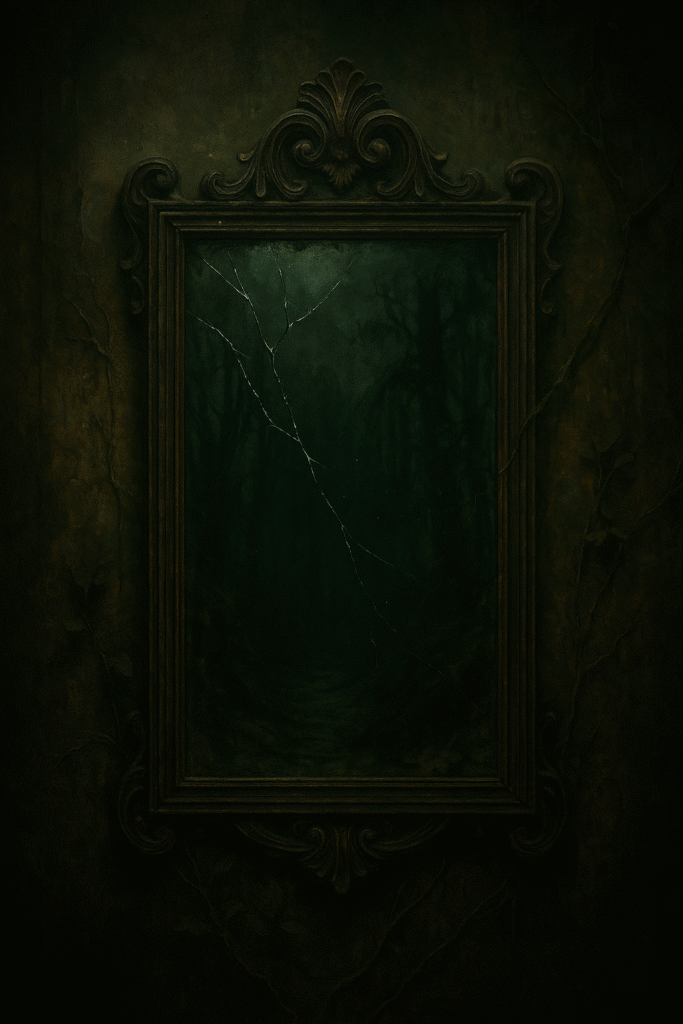
Quick Facts
Region of Origin: Chiloé Archipelago, Southern Chile
Also Known As:
- Espejo Maldito
- Mirror of the Brujos
- Night-Glass
- The Drowned Eye
- Glass of the Tide
Classification: Cursed object / spirit conduit / divinatory instrument
First Appearance: Presumed 16th–17th century; possibly pre-colonial
Original Custodians: La Recta Provincia — secretive sorcerous brotherhood of Chiloé
Alleged Abilities: - Remote viewing
- Ghost communion
- Memory extraction
- Dream-contact
- Soul entrapment
- Independent reflection
Current Status: Unverified; rumored active among living brujos
Introduction
The island of Chiloé is a world apart — a land where rain never ceases and superstition breathes through the timber walls of stilted houses. Its coasts are jagged and hungry; its forests whisper with things older than the Church. Sailors blessing themselves before setting out claim it is not the waves that drown men, but what lives beneath them.
Among Chiloé’s many haunted relics, none is spoken of with more fear than the Cursed Mirror.
It is said to reflect more than the world in front of it — but also the world beneath it.
It shows the faces of the dead.
It shows what was lost.
It shows what waits.
In taverns lit by oil lamps, fishermen mutter warnings:
“If you hear the sea inside a mirror — run.”
The mirror is not an artifact.
It is a wound.
Origins — Forged in Grief and Salt
Chiloé’s spiritual landscape predates written history.
Its islands belong not only to the living but to the drowned.
The Sorcerous Republic
At the heart of Chiloé’s occult history lies La Recta Provincia, sometimes translated as “The Just Province” — a hidden society of brujos who maintained balance between sea and land. Cloaked in secrecy, they were said to:
- Steal or barter souls
- Ride on the backs of monstrous sea creatures
- Fly at night carried by dark winds
- Speak to spirits in the language of tides
Their magic is said to come from pacts — not with demons, but with the dead lost to the sea.
The Widow’s Bargain
The most circulated story credits the mirror’s creation to a grieving widow. Her young son drowned far from the shore; no body was recovered. Refusing to accept the sea’s silence, she sought out a brujo near Quicaví — a man feared even by his own kind.
He instructed her to gather materials touched by death:
- Volcanic sand from the beach where her son last played
- Driftwood from a wrecked ship
- Silver coins taken from a dead man’s pocket
- Water left in a drowned gull’s feathers
- Tears shed for nine nights
The process was not craft — but sacrifice.
The story says:
- The silver was melted with grave soil
- The glass was fused with brine taken at moonrise
- Her tears were mixed into the molten material
When cooled, the mirror held a surface darker than the bottom of the sea.
She was told:
“Look only once.”
She ignored the warning.
She looked again and again, each time seeing less of her son and more of herself… smiling while she silently wept.
By dawn, the widow had vanished.
Only seaweed clung to the threshold of her home, and the mirror sat where she last stood — dripping saltwater.
Appearance — The Sleeping Sea in Silver
The mirror is consistently described as:
- Small, hand-held, oval
- Framed in tarnished silver that never warms
- Surface dark as obsidian, yet highly reflective
The glass behaves strangely:
- Sometimes fogs from the inside
- Sometimes ripples outward, like water disturbed from below
- At times, reflections appear sharper than reality
- At other times, they lag behind your movements by seconds
One unsettling detail:
The mirror often hides what is behind you, replacing backgrounds with rolling water, fog, or darkness.
Some say its surface smells faintly of the ocean even far inland.
Others claim the frame is cold enough to burn.
Behavior — An Eye That Remembers
The Cursed Mirror does not merely show.
It observes.
It responds.
It remembers.
How It Activates
The mirror is most responsive:
- During storms
- At night
- In rooms with standing water
- When held by mourners
It reacts strongly to grief — as though it feeds on loss.
Observed Phenomena
Those who risk a glance report:
- Sea sounds emanating from the glass
- Whispers echoing several seconds late
- A reflection that smiles too long
- A reflection that looks away before you do
- Figures passing behind you in the mirror that are not in the room
Some viewers describe a sensation like being pulled forward — gently at first, then violently.
It is not uncommon for users to faint, dream of drowning, or awaken with salt crusted on their skin.
Abilities — A Window to the Drowned
Scrying (Remote Viewing)
The mirror can reveal distant locations — especially oceanic sites, shipwrecks, or storm-torn homes.
However, the longer one watches, the more reality shifts.
The viewer forgets where they are.
Sometimes, they forget who they are.
Communion with the Dead
Users frequently report seeing or hearing deceased loved ones.
These ghosts appear:
- Wet
- Pale
- Open-eyed
They speak in broken phrases, often:
- Warnings
- Pleas
- Echoes of their last words
These spirits cannot be trusted.
They beg to be let out — or beg to pull you in.
Memory Extraction
After viewing, victims experience:
- Missing hours
- Forgotten names
- Lost memories from childhood
The mirror takes pieces of the mind slowly, like a tide eroding stone.
Dream Infiltration
After contact, dreams always involve water:
- Drowning
- Being chased through kelp fields
- Silent figures watching from beneath waves
Some never stop dreaming — even when awake.
Soul Entrapment
Victims sometimes notice their reflection behaving independently.
This is the warning.
If ignored, their reflection may remain inside the mirror permanently — open-eyed, silent, and waiting.
The mirror grows heavier after such events.
Associated Phenomena
Where the mirror is kept:
- Dogs howl or flee
- Rain falls though skies are clear
- Floors collect sea mist
- Wooden walls swell as if underwater
- Candles burn blue
Some claim that the drowned knock on windows at night.
Others say the mirror “breathes” — exhaling brine.
Historical Accounts & Legends
I. The Silent House of Quicaví
A fisherman found a small mirror tangled in seaweed.
His wife began speaking to it nightly, convinced she saw her mother in the glass.
Days later, neighbors heard singing during a storm — but only the fisherman survived to tell the tale.
His wife vanished, though her wet footprints remained in the house for days.
He swore he still saw her face — in the mirror — long after.
II. The Drowned Wedding
A bride-to-be attempted to contact her drowned fiancé.
She succeeded — then spiraled into obsession.
She spent days holding the mirror, whispering into it.
On her wedding morning, she disappeared.
In her room lay:
- A saltwater puddle
- Her wedding dress
- The mirror
The reflection showed a young man, still sinking in black water.
III. The Brujo Who Attempted Destruction
One account describes a powerful brujo who tried to destroy the mirror.
He:
- Heated it in fire
- Struck it with iron
- Buried it under volcanic stone
Nothing worked.
Days later, he was found dead along the shore, lungs filled with seawater.
A mirror rested on his chest, perfectly dry.
His reflection, witnesses say, screamed silently from inside.
Custody & Transmission
Possession of the mirror is neither random nor chosen.
It passes between owners when:
- Wrapped in kelp
- Bound with red wool
- Gifted with blood
It cannot be sold.
To attempt sale binds the seller’s reflection to the glass.
Protective Rituals
Avoidance Rules
Islanders teach:
- Never look into mirrors during storms
- Never examine reflections after sunset
- Never call to the dead near reflective surfaces
Banishing Procedure
To be rid of the mirror:
- Wrap in fresh kelp
- Bind with red wool
- Take to a tidal pool
- Submerge at low tide
- Leave without speaking
- Do not look back
If the ocean touches the bearer’s heel…
the pact remains.
Modern Sightings
Rumors persist of:
- Occult collectors keeping the mirror submerged in salt water
- A Santiago market where it was briefly sold before disappearing
- A European museum that acquired an unmarked “wet mirror” and immediately closed the exhibit
Urban legends claim the mirror occasionally appears on ships — placed inside locked rooms, dripping.
A common thread remains:
Those who encounter it dream of drowning.
Symbolism & Interpretation
The Cursed Mirror represents Chiloé’s defining tension:
- Life vs. death
- Land vs. sea
- Memory vs. forgetting
It embodies:
- Grief unable to let go
- The price of sight beyond the living
- The impossibility of returning what the ocean claims
It is a mirror that does not reflect you —
but the part of you you have lost.
Conclusion — When Water Looks Back
Most mirrors accept a face and return it unchanged.
This one returns a question.
To stare into the Cursed Mirror of Chiloé is to step into the tide — unsure whether you will be allowed back.
It offers glimpses of what was loved, what was taken, what remains beneath the waves.
But every gift is a trade: memory, sanity, or soul.
If you ever find a silver mirror slick with kelp, heavy as regret, do not look into it.
Because if the sea has been searching for you…
the mirror will know.
It will show you the drowned.
It will show you yourself —
as you were,
as you are,
and as you will be,
deep beneath the water,
eyes open.
The last reflection you see
may not be the one that follows you home.