
Relics remember.
Time erodes stone, but never memory. Each artifact whispers of the hands that shaped it.
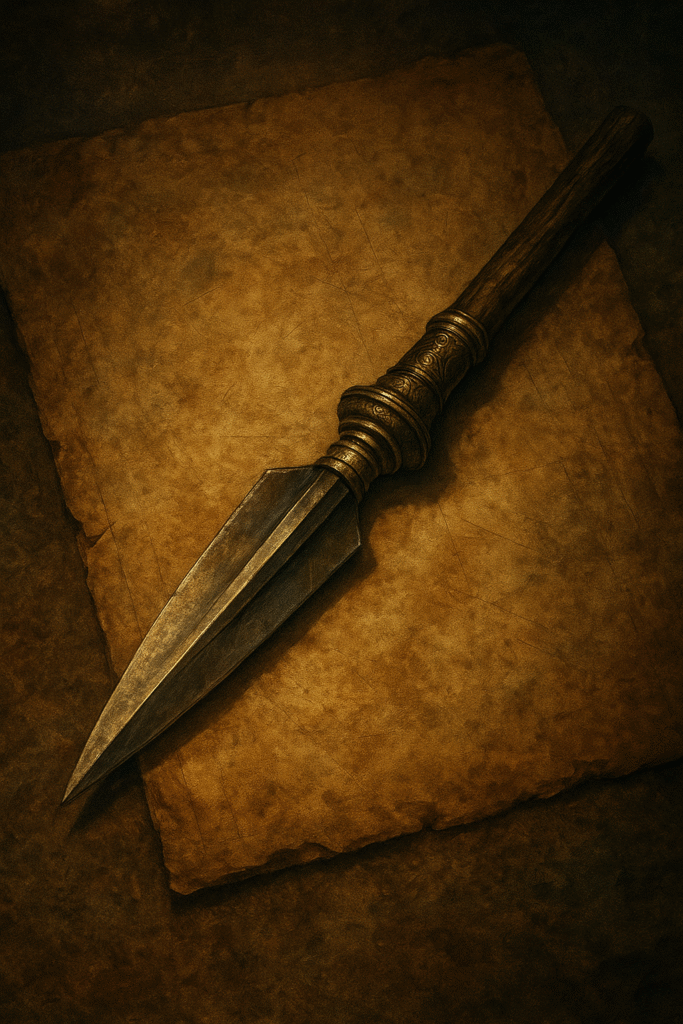
The Spear of Destiny – The Holy Lance That Pierced History
Legends whisper that this spear was forged in divine fire and cooled in human blood.
They say it pierced the side of Christ as He hung upon the cross — an act meant to confirm death, but which instead cursed life itself.
Those who have held the Spear speak of its hum, soft and ceaseless, as though the weapon remembers the heartbeat of the god it once struck.
The Romans called it the Lancea Longini. The faithful called it holy. The damned called it hunger.
Through centuries, it passed from hand to hand — from Longinus, the blind centurion who saw again after wounding God, to Constantine, to Charlemagne, and finally into the trembling grasp of madmen who thought themselves chosen. Each found the same fate: conquest, then ruin.
Every empire that wielded the Spear was blessed in victory… and doomed in the years that followed.
Old chronicles say the relic was split into three — one sealed in Vienna, another in the Vatican, the last lost to time. Yet no one agrees if the Spear still carries divine power, or if it merely feeds on the faith of those desperate enough to seek it.
Hunters who have come across its trail describe an unsettling presence. Lights flicker, prayers turn hollow, and reflections twist into faces of the dead. The metal bleeds rust like old wounds reopening.
Somewhere, perhaps, it waits still — buried beneath cathedrals, locked in vaults, or carried by those too blind to see their own undoing.
For the Spear of Destiny grants no miracles.
Only reminders… that the hand which dares to wound Heaven shall never rest again.
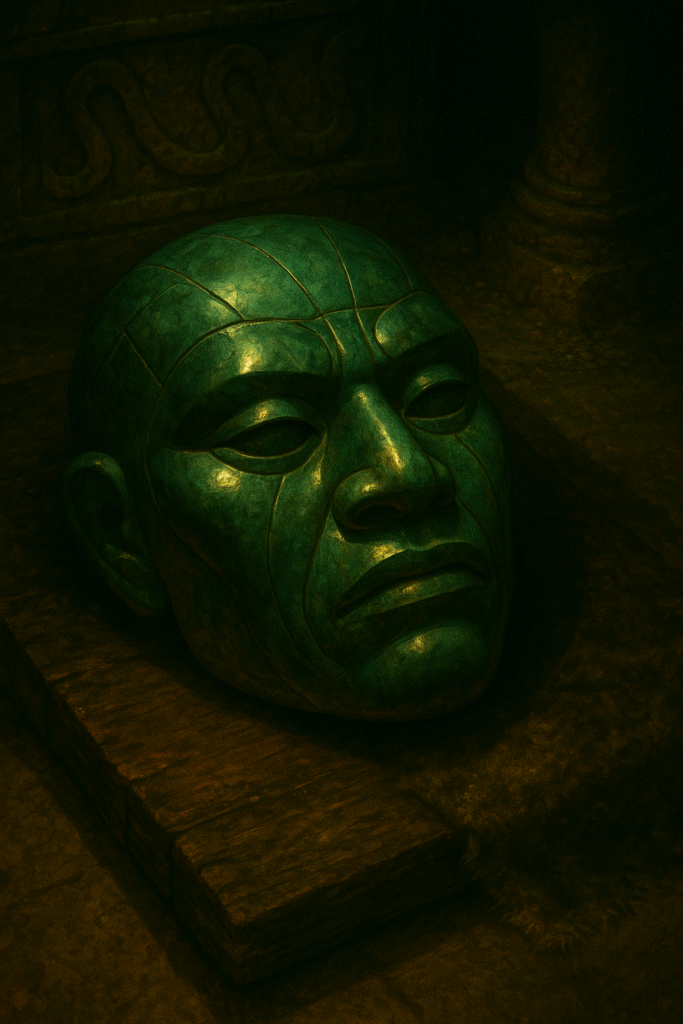
The Jade Death Mask – Face of the Eternal Kings
They say it was carved for a ruler who refused to die. Not in gold or silver, but in cold green jade — a stone that never decays, chosen to preserve both beauty and blasphemy. Historians trace it to the late Han period, though some claim the craft predates any dynasty, belonging instead to the Wu shamans who believed jade could bind souls to the earth.
The mask was said to seal the spirit of an emperor whose wrath defied heaven. When he was entombed, priests bound his essence behind the jade, carving sutras inside the mask so that the imprisoned soul could never read them. Those who made it were executed, their tongues buried with lime to ensure silence.
The stone has never warmed in a mortal hand. Even when placed in fire, it remains cool to the touch — absorbing heat as though feeding on it. Whisper near it, and your voice falters; breath slows until it feels borrowed.
Old funerary scrolls describe a ritual: the emperor’s mouth filled with powdered jade and cinnabar, his heart pierced with a needle of gold, his face covered and bound tight. The purpose was not to honor him, but to muzzle what still moved within.
Tomb records speak of thefts — warlords, archaeologists, and collectors who all vanished within weeks of finding it. The last known account, dated 1912, was a journal entry written in trembling script:
“The mask watched me sleep. When I woke, it was closer.”
Some scholars insist it is not an imperial relic but a vessel — a container for something that once bargained with gods. Whatever truth survives, the mask’s presence carries a quiet dread: mirrors distort, shadows breathe, and sound bends toward it like reverence.
Because jade remembers. And the thing sealed behind that green silence may still be waiting for a face to wear again.
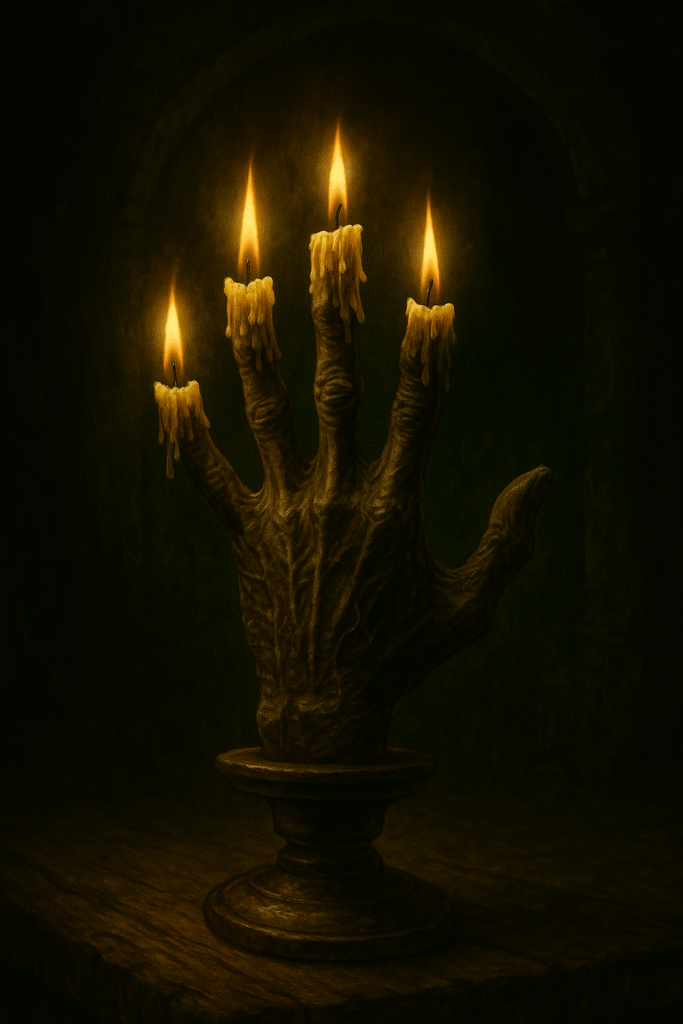
The Hand of Glory – Flame of the Hanged Thief
They say it was cut from the wrist of a hanged man, still warm from his last breath. The fingers, once instruments of sin, were dried in graveyard ash and waxed with tallow from the same man’s fat. When lit, it was said to burn with a ghostly flame — one that no wind could extinguish.
In medieval Europe, the Hand of Glory was the tool of thieves and sorcerers. By its light, locks fell open, and those who slept near it could not wake until it was snuffed. The hand’s flame was not true fire, but something colder — the spark of a stolen soul, flickering in defiance of heaven.
Grimoires like the Petit Albert describe the ritual in grotesque detail:
- Sever the hand from a man executed for theft or murder.
- Wrap it in a funeral shroud and dry it under a gallows during a lunar eclipse.
- Dip it in the rendered fat of the same corpse mixed with saltpeter and pepper.
- Insert candles into the stiffened fingers, one for each locked door to open.
Legends claim the hand’s glow reveals what is hidden — not just treasures, but truths meant to stay buried. Some accounts tell of the flames whispering, each tongue of fire a lost voice pleading for release. Others say it burns brightest when it recognizes guilt in the room.
When the Inquisition began hunting sorcerers, every Hand of Glory they found was burned in holy oil. Yet even now, a few are said to survive — sealed in churches, locked beneath glass, or traded among occult collectors.
Those who have seen one lit speak of a light that doesn’t illuminate, only devours. And in that pale glow, shadows do not flee… they watch.
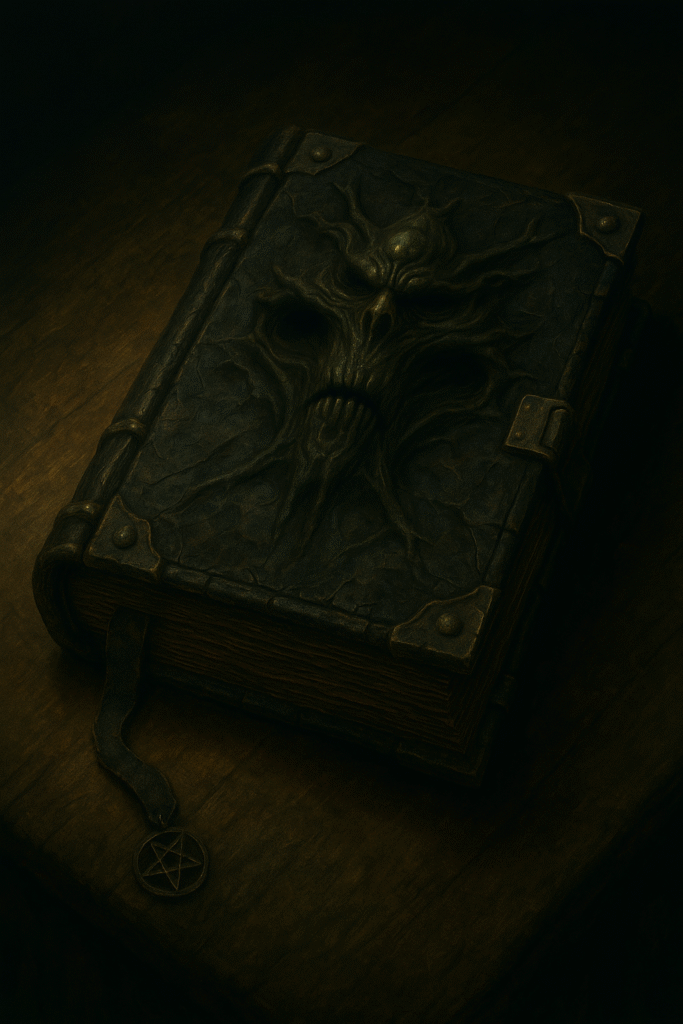
The Codex Tenebris – The Book That Devours the Reader
They say the Codex Tenebris was not written by man but dictated — whispered into ink by something that should never have been heard. Its pages, bound in the skin of penitents, bear words that shift like smoke when read aloud, as if recoiling from mortal comprehension. The language is neither Latin nor Greek, yet echoes of both linger within, giving readers the illusion of understanding until the meaning takes root in their mind… and begins to whisper back.
According to medieval accounts, the book surfaced in the 12th century among the Benedictine scribes of Cluny Abbey. Monks claimed it was found sealed in black wax beneath a collapsed altar, its script said to predate Babel itself. Those who opened it either vanished, or were found days later chanting in languages unknown to the living. The Church attempted to burn the tome three times, but the flames only dimmed — as if swallowing light rather than giving it.
In folklore, the Codex is said to contain rituals for speaking with “the roots of the world” — entities older than gods, buried deep beneath creation. Each invocation demands a price: memory, blood, or breath. The deeper one reads, the less of oneself remains. The final chapter is blank to most eyes, yet under moonlight it reveals an ever-changing sigil — the signature of the reader, now part of the book’s living script.
Those who have dared to hear the Codex read aloud describe a dreadful harmony, like choirs layered over screams. It is said the book does not reveal knowledge, only reflection — showing each reader the darkness within their own soul, written across eternity.
Where it lies now is uncertain. Some say it rests in the Vatican’s Secret Archives, chained beneath pages of lead. Others whisper it was taken east, guarded by monks who pray in silence — not to be holy, but to keep the book asleep.
For the Codex Tenebris is not merely read.
It remembers who listens.
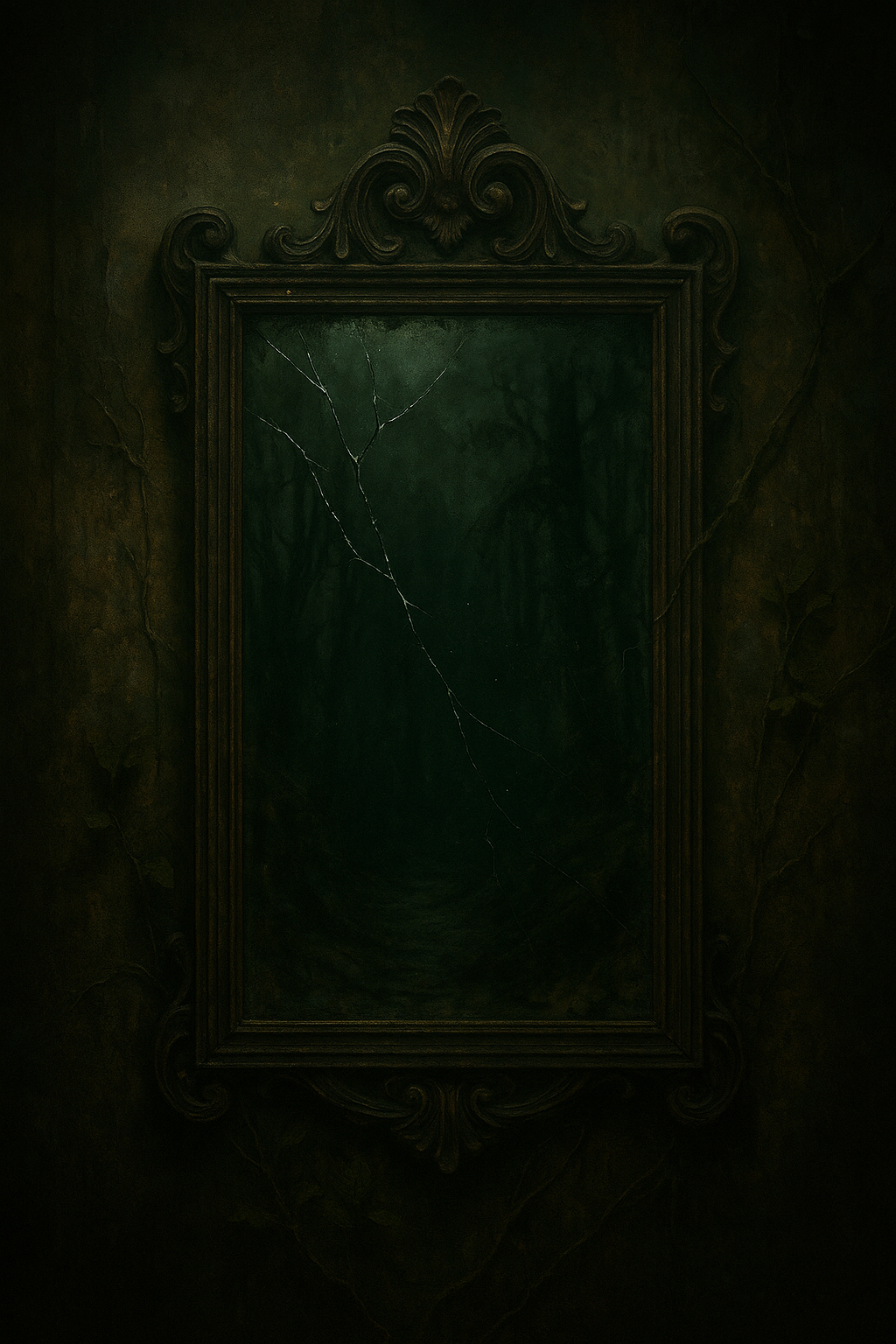
The Cursed Mirror of Chiloé — Reflections That Do Not Obey
Legends of the Chiloé Archipelago speak of a mirror unlike any other — not crafted by human hands, but born from the will of the brujos chilotes, the island’s warlocks. Forged in the coastal mists where moonlight meets saltwater, it was said to have been made from volcanic obsidian, polished with oil rendered from drowned sailors and sealed with the whispers of the dead.
The mirror was never meant for vanity. It was an instrument of binding. The brujos used it to trap wandering souls, especially those of the sea — fishermen lost to storms, children taken by the tide, even witches betrayed by their own kin. The captured spirits would be bound in reflection, their faces appearing faintly beneath the glass, forever screaming behind a surface that never broke.
When the mirror was brought forth during a ritual, the sea would still, and the waves would turn glass-smooth, mirroring the sky. The warlocks of Chiloé believed that by gazing into it during an eclipse, one could speak to those buried by the tide or command spirits to do their bidding. But those who dared without proper protection found their own souls pulled into the blackness — their bodies left staring blankly at the sea, hollow and lifeless.
It is said that the Mirror was last seen in the hands of a brujo who betrayed the coven of Quicaví. He sought immortality by gazing into it under a blood moon. The following morning, his hut was found half-sunken in the marshes, the mirror face-down in the mud. Locals who turned it over saw their own reflections smile when they did not.
To this day, fishermen refuse to carry mirrors aboard their boats. They say that when the fog rolls thick and the sea grows still, the Mirror of Chiloé floats just beneath the surface — waiting for another to look into it.
Because it does not show who you are. It shows who is watching.
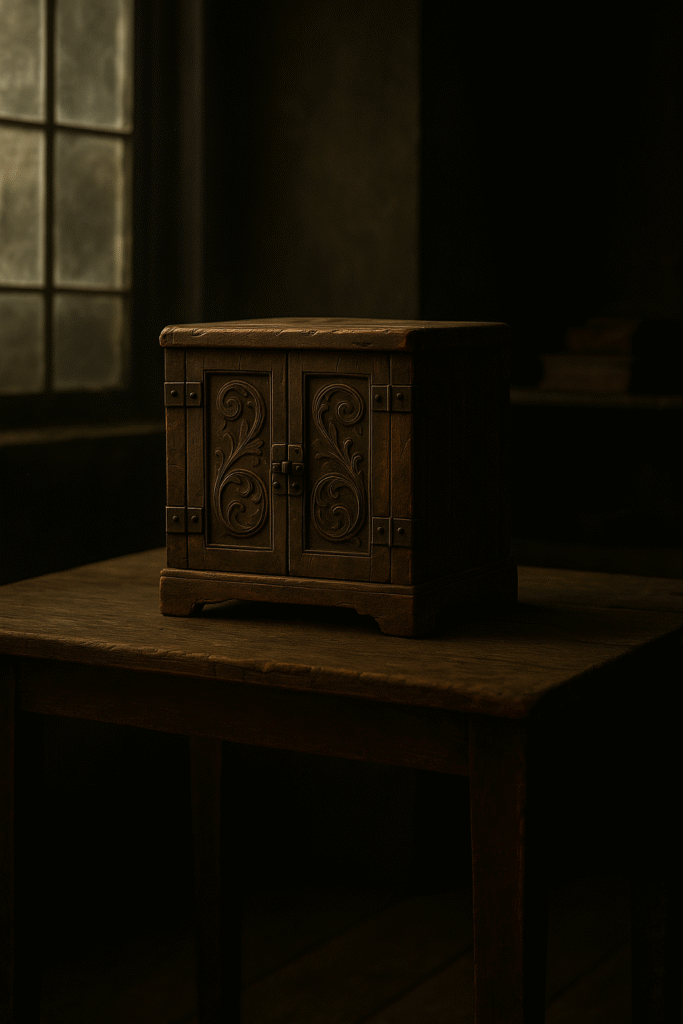
The Dybbuk Box — Spirit Without Rest
It began as an heirloom, passed down through generations of a Polish Jewish family — a small wooden wine cabinet said to have survived the Nazi invasion. But legends claim the object holds more than mere history. Known now as the Dybbuk Box, this artifact is said to house a dybbuk: a malicious spirit from Jewish folklore, one that clings to the living, tormenting them until properly exorcised.
In Jewish mysticism, a dybbuk is the dislocated soul of the dead — often someone who committed grave sins in life or died suddenly, violently, or without proper burial rites. Instead of passing on, the soul clings to the world of the living, searching for a host to inhabit. When bound inside a physical object, a dybbuk must remain sealed, lest it find another body to possess.
According to the original owner, the Dybbuk Box was purchased at an estate sale in Portland, Oregon, in the early 2000s. It came with a warning: Never open it. Inside were strange items — a dried rosebud, two 1920s pennies, a lock of hair bound with twine, and a small golden goblet. The new owner ignored the warning, and soon after, strange things began to occur: nightmares, health issues, shadowy figures, and the overwhelming stench of cat urine wherever the box was kept.
As the tale spread, new owners attempted to resell or bury the artifact, each reporting intense misfortune and psychological distress. Electronics malfunctioned near it. Animals refused to go near it. And dreams of an old hag — one that whispered in Yiddish — plagued those who slept near it. Paranormal researchers who examined the box reported powerful electromagnetic disturbances and sudden temperature drops, even in sealed, controlled environments.
Though skeptics claim it’s all psychological suggestion, the Dybbuk Box has become an infamous modern artifact — its presence tied to a chain of allegedly cursed events and unexplained phenomena. It now rests sealed within a protective case in a private collection, untouched, unopened, and watched by those who believe the curse remains active.
Whether the box truly holds a malevolent spirit or is simply a vessel for belief and fear, one thing is certain: those who open it never remain unchanged.
Because it does not wait for you to believe. It waits for you to touch the lid.