
The Banshee — Wail of the Coming Death
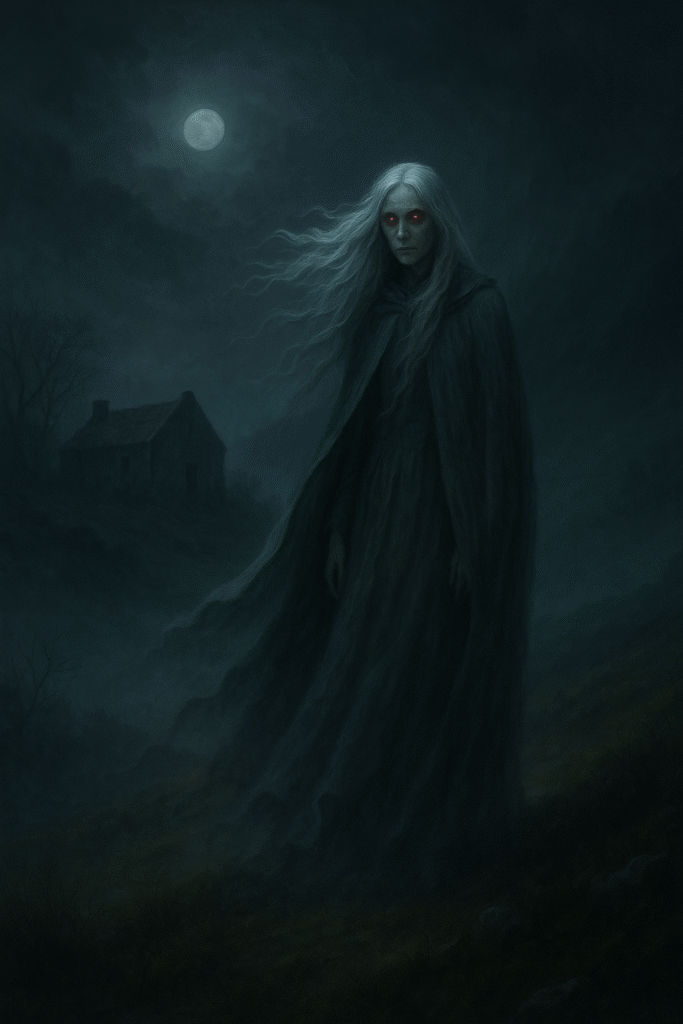
Quick Facts
Region: Ireland, Scotland, Isle of Man
Also Known As: Bean Sí, Bean Sidhe, Woman of the Mound, Fairy Woman
Classification: Death omen spirit / supernatural herald
Primary Origin: Celtic folklore tied to noble Irish bloodlines
Typical Behavior: Appears before a death, wails or keens, vanishes without harm
First Signs: Piercing wail, weeping near windows, disembodied keening, flickering candles, cold air
Weakness (traditional): None — she is not malevolent
Warning Object: Silver hair comb left on road or doorstep (never touch)
Introduction
The Irish don’t fear the Banshee because she kills.
They fear her because she knows when death is coming.
She appears not with malice, but with mourning — her cry splitting the night like a blade of sorrow.
A keening wail, long and hollow, heard only by those who need to hear it.
There is no warning before she comes.
No knock. No shadow. No omen except the cry itself.
And those who hear her know:
Someone will die.
She is not a ghost.
Not a witch.
Not a killer.
The Banshee is a messenger.
A woman of the sídhe — the fairy mounds — tasked with mourning the souls of those whose time has come.
She does not scream for the world.
She screams for you.
This case file explores her origins, traits, behaviors, regional variants, encounters, cultural significance, and the symbolism behind one of Ireland’s oldest omens.
Origins
Old Blood and the Mounds of Mourning
The Banshee’s name derives from the Irish Bean Sí — meaning “woman of the mound.”
These mounds, or sídhe, are believed to be entrances to the Otherworld — home of the Aos Sí, the fairy folk.
In ancient Celtic belief, the dead did not vanish — they simply crossed through the veil.
Some spirits stayed tethered to families across generations.
The Banshee is one of these spirits.
Traditionally, she mourned only for the old noble bloodlines:
- O’Neill
- O’Connor
- O’Brien
- O’Grady
- Kavanagh
Over time, this expanded.
Today, her wail is said to be heard for any family with deep ancestral roots in Ireland.
What Creates a Banshee?
Folklore suggests several possibilities:
- Spirits of women who died in grief
- Ghosts of ancient professional mourners (bean chaointe)
- Fairy beings assigned to watch over families
- Ancestral guardians of the dead
Whether one spirit or many, Banshees share a single purpose:
To mourn before the death occurs.
Appearance — The Shape of Sorrow
The Banshee can appear in several forms:
The Maiden
- Pale, youthful
- Long, flowing silver or dark hair
- White or pale-gray dress
The Matron
- Middle-aged
- Somber expression
- Cloaked in gray
The Crone
- Withered, gaunt
- Red-rimmed eyes from crying
- Hair wild or tangled
Across all forms:
- Her eyes are always sorrowful.
- Her hair is important — often combed with a silver comb, a cursed object if touched.
- Her feet may not touch the ground.
- She may vanish into mist when approached.
Behavior
Messenger of Death
The Banshee never causes death — she mourns it.
She appears:
- On the night before someone dies
- At windows
- Near water
- On lonely roads
- Outside family homes
- In doorways or halls
Auditory Signs
Common sounds include:
- A piercing wail
- Soft sobbing
- Prolonged keening
- Whispered mourning
- Your name, or the name of the soon-to-die, carried on the wind
Animals react strongly:
- Dogs whine
- Cats hide
- Horses refuse to move
Some describe her cry as:
“A sound that feels like it came from the earth itself.”
Signs & Objects
- Cold gusts in still air
- Candles extinguish suddenly
- Rooms grow heavy with sadness
- A silver comb appears on a windowsill or doorstep
The comb should never be touched — it invites misfortune.
Abilities
- Keening Cry: Can induce terror, paralysis, fainting
- Precognition: Foresees death before it happens
- Apparition: Vanishes instantly, passes through walls
- Echo Projection: Can be heard across entire towns
- Hair Magic: Her comb is considered a supernatural trap
Regional Variants
Ireland — Banshee / Bean Sí
The classic form: wailing near homes before a death.
Scotland — Bean Nighe
A washer-woman spirit cleaning bloody clothes of those doomed to die.
Isle of Man — Caointeach
A quieter, more maternal figure who stands outside houses at night.
Encounters
The Weeping at Rathcullen Manor (Limerick, Ireland, 1972)
An old estate shrouded in decay became the site of a chilling incident when Callum McDonnell awoke to the sound of a woman sobbing in the sitting room.
No intruder was found — only the scent of lilies in an empty house.
His grandmother, Lady Eileen, died peacefully hours later.
Callum insisted:
“Something came to cry for her — something that knew before I did.”
The Silver Comb on Belmullet Road (Mayo, 1996)
Two boys stumbled upon a silver comb on a rural road.
One picked it up — joking about banshees.
That night he dreamed of a woman crying at the foot of his bed.
The next morning, his friend learned that a close relative had died in the night.
The comb was gone.
A priest later said:
“Some objects aren’t lost. They are left for those meant to find them.”
The Hospice Wail (County Clare, 2003)
A nurse on night shift heard weeping outside a patient’s room.
Inside, she briefly saw a woman in a gray shawl sitting silently by the window.
The patient died a few hours later, without alarm or struggle.
The nurse transferred jobs soon after.
The Glen Derry Bridge Incident (Donegal, 1982)
Three hunters crossing a stone bridge heard a cry so haunting that two froze on the spot.
One laughed at it mockingly.
A sudden wind knocked him off the bridge.
He died two days later from a hemorrhage.
His friend later said:
“He didn’t die because she was angry.
He died because he mocked her grief.”
The Woman at the Window (Antrim, 2021)
A young girl told her mother that a “sad lady” visited her room at night and sang to her.
Her hair would be mysteriously braided by morning.
Baby monitor audio later captured a voice whispering:
“Not yet… but soon.”
The mother fled with her child.
Days later, a distant relative died unexpectedly — someone the girl had never met.
Cultural Significance
The Banshee symbolizes:
- Grief
- Family legacy
- Respect for the dead
- The inevitability of loss
She is not a monster — she is a witness to death.
In Popular Media
- Films: Darby O’Gill and the Little People, The Banshee Chapter
- TV: Supernatural, AHS
- Games: Dungeons & Dragons, Dragon Age, Magic: The Gathering
Most depictions make her deadly.
The truth is more tragic — she mourns what she cannot stop.
Protection & Superstition
- Never touch a silver comb
- Never mock her cry
- Do not follow her voice
- Close windows when wailing is heard
Some families leave cloth offerings as a gesture of respect.
Symbolism & Interpretation
The Banshee represents:
- The sorrow before loss
- The ache of parting
- The voice of ancestry
- Acceptance of death’s certainty
She is the echo of grief that arrives early.
Conclusion
The Banshee does not kill.
She does not curse.
She does not follow out of spite.
She mourns.
She is the voice that cries when a candle is about to go out — the silent companion to death, unseen but always aware.
If the wind rises and a woman weeps beyond your walls, do not search for her.
Hold those you love.
The Banshee never wails without reason.